Sunday, March 13, 2022

100 Years Ago March 11, 2022

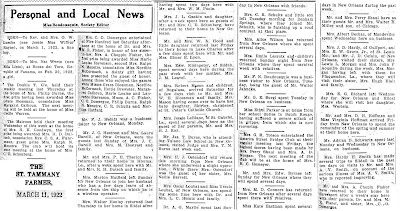
What was going on 100 years ago this week? CLICK HERE for a link to the St. Tammany Farmer Issue of  March 11, 1922. The link is provided by the Library of Congress and its Chronicling America service.

Click on the sample images below to see larger versions.


Corner Drug Store Soda Fountain

 
Woman Speaker To Visit 


Mandeville News

 
Covington Plans Sewer/Water Election

 
Victrola Records Issued Monthly

 
Great Strawberry Crop Brings Commendation

 
St. Joe Brick Slidell Plant

 
Society News

 
Slidell News

 
Schonberg's Pharmacy Soda Fountain

 
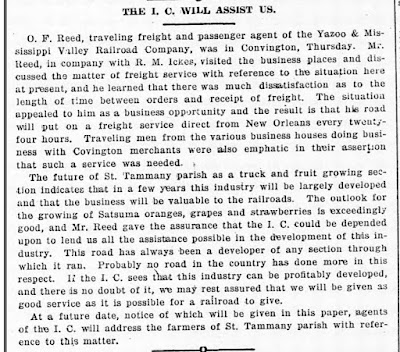
Railroad Editorial

 
Murphy Buys Place on Girod Street

 
Mandeville's Masquerade Ball

 
Madisonville News

 
Frederick Moves Offices To Southern Hotel

 
Folsom News

 
Evans Praised for Railroad Career

 
Dairymen Are To Be Chartered

 
The World Is Ready To Get Out Of The Sick Bed

See also:

Cafe Cabaret Soda Fountain

Saturday, March 12, 2022

Life On A Farm In Grandmother's Day

 This article appeared in the March 11, 1922, issue of the St. Tammany Farmer. It gives an account of "Life On A Farm In The Day of My Grandmother," as told by Winnie D. Reid.

 
Click on the image to make it larger and more readable. 

Here is the text from the article:

LIFE ON A FARM IN THE DAY OF MY GRANDMOTHER

Ox Teams in Olden Days Only Mode of Locomotion


(By Winnie D. Reid)

It is a trite but true saying that we do not fully realize the value of our dearest possessions until we have lost them. Certainly I never realized, until the clear voice was hushed forever and the stories and recollections recounted by her were only a memory, the wealth of experience and human sympathy expressed in the tales which my great grandmother used to tell as we sat around the hearth on cold winter nights.

Born an 1830, she was ninety years of age when she died. The experience of her long life had their beginning in the country neighborhood surrounding the town in Mississippi now known as Tylertown. 

In the busy life that she led, there were few interests which would be considered worthwhile by a girl of today. The girls of the family not only managed the affairs of the household; doing the cleaning, cooking, and sewing, but worked in the fields, helping to cultivate the crops which supplied food and clothing for the family.

Much of the time of the girls and women was spent in making cloth. After the cotton had been harvested, the fibers were separated from the seeds by hand. This was a laborious process, requiring many hours of painstaking labor. When the cotton fiber was free from seeds, it was prepared for spinning by a process called "carding," which consisted of placing the cotton between two boards covered with bristling wires and pulling the boards or "cards" across each other by handles.

The fibers were then spun into thread on the familiar old-fashioned spinning wheels and woven on hand looms into strong, coarse fabrics from which all of the clothing of the family was made. Grandmother said that she never had a dress which was made from machine-made cloth until she was grown.

Another interesting occupation of the women folk was soap making. In some country districts, soap is still made at home by using lye and fat, but lye being unknown in grandmother's day, a solution made from the  ashes of oak wood was used. This solution was cooked with fat and allowed to harden into soap, except in time of such a scarcity of fat that none was to be had for soap-making. In that event, the clothes were boiled in the ash solution to remove the dirt. By this process, my grandmother said, they were made as clean as they are in the modern laundry.

Since the railroad was in my grand mother's day a thing unheard of, the securing of provisions would have been a great problem except for the fact that most of the provisions were produced on the farms. Flour, coffee, and sugar were practically the only products bought, and these were considered as luxuries.

Among the very first things that grandmother could remember was the two weeks' journey to Covington, La., for provisions. The supplies, which had been brought on barges to Covington, were carried on ox wagons to the homes in the surrounding country.

The oxen, usually from two to four yokes, or pairs, of them, would travel at their leisurely pace until night fell, when a camp would be made by the roadside. 'Enough supplies would be purchased at one time to suffice for three months, and during all that time the family, to whom the trips to Covington furnished almost the sole contact with the outside world, would be practically isolated.

The Civil War was one of the milestones in grandmother's life and many of her most thrilling stories were of those stirring times. After the death of her husband, who  was killed in battle, she cared for her children, provided their food and clothing, and often rode many miles alone on horseback transacting business affairs which she alone was left to manage.

Hers was a wide and varied experience, and her life and character such as her descendants would do well to emulate. Indeed, I hope that if I ever come to a time when I shall tell stories of my life to my great grandchildren, my own experiences, which at present lie mostly in the future, will have given me one-half the strength of character, the understanding of life and the nobility of spirit that made my great grandmother the beloved woman of my childhood's memories.


St. Tammany Farmer March 11, 1922


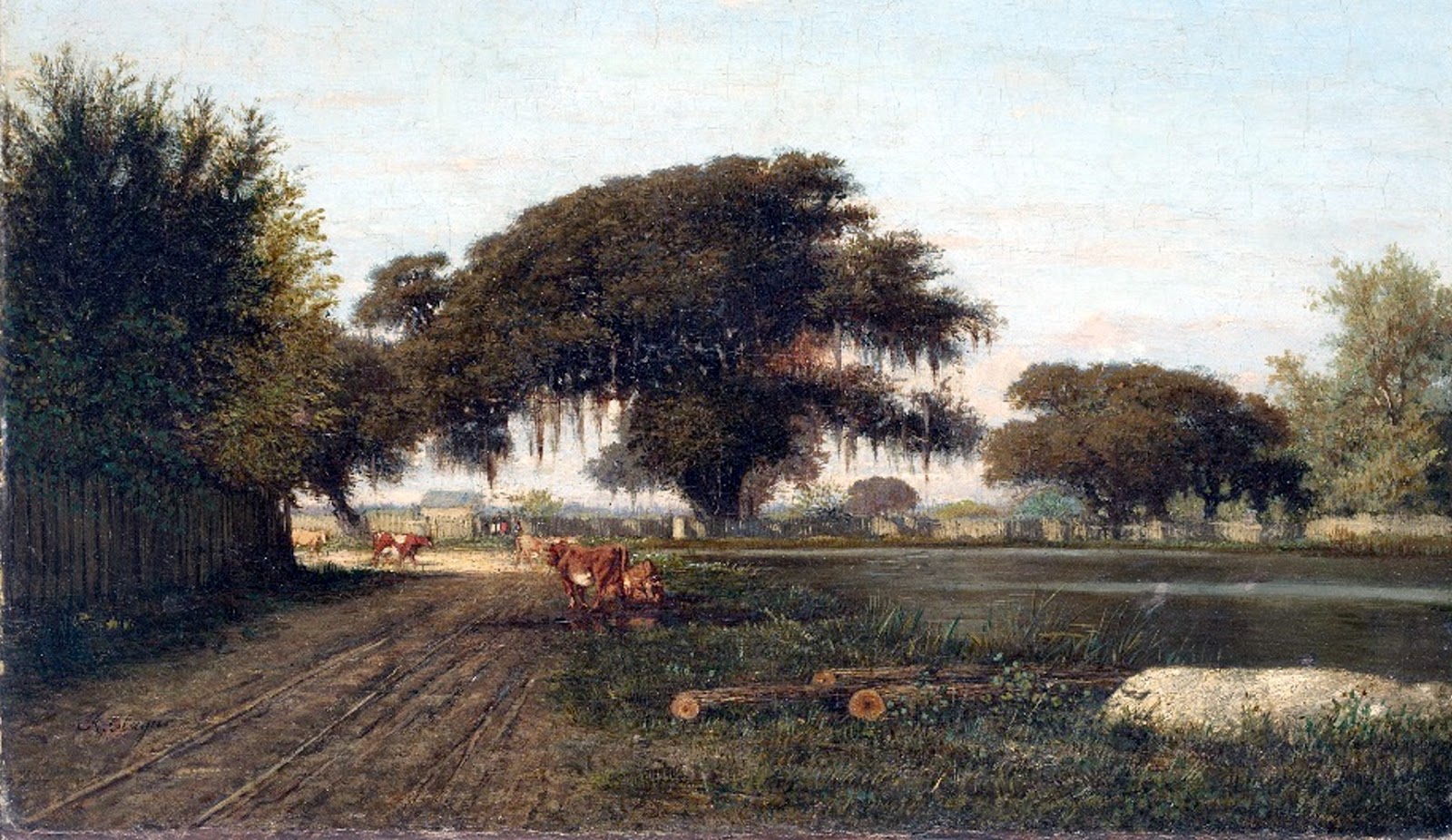
The above painting entitled "Farm in St. Tammany" was produced by American artist Richard Clague (1821-1873) sometime between 1851 and 1870.  Click on the image to make it larger.Painting Source: LSU Museum of Art

Sunday, March 6, 2022

100 Years Ago March 4, 2022

What was going on 100 years ago this week? CLICK HERE for a link to the St. Tammany Farmer Issue of  March 4, 1922. The link is provided by the Library of Congress and its Chronicling America service.

Click on the sample images below to see larger versions.


Folsom News
 
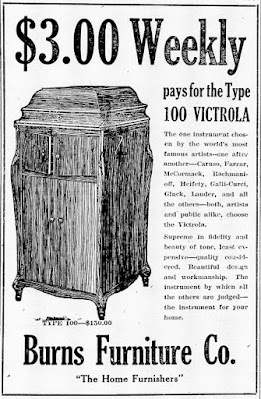
Burns Furniture Ad

 
Elijah Crawford Obituary

 
Evans Retires From Railroad

 
Freight Handling Issues

 
Madisonville News

 
Mandeville News


Milk Depot For Covington


Pearl River Dance Held

 
Freight By Steamer

 
Vix Obituary


Society News

 
Slidell News

 
Bulloch Drug Store


Saturday, March 5, 2022

Grayhawk Perkins Is Guest Speaker

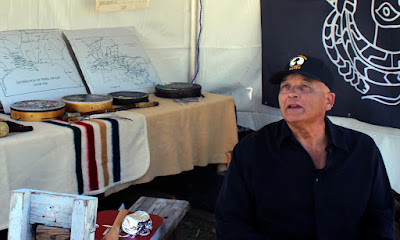
Grayhawk Perkins, St. Tammany's Native American storyteller, gave three presentations this month on an interesting variety of topics. 

 A "Lecture Dinner" featuring Grayhawk Perkins was held Wednesday, March 9, at Trey Yuen Restaurant in Mandeville.  Grayhawk spoke to the Old Mandeville Historic Association about the Native American heritage of the Mandeville and Northshore area. 


Grayhawk Perkins

Perkins program was entitled "Native American Culture of the Southeast" covering the time period before and after European contact, from the mound culture through today’s native culture, lifestyle, men & women’s roles and covering stereotype misconceptions.

Perkins is an award-winning local Native American educator, musician, cultural historian, and storyteller.

According to the association's website, he was born in New Orleans to parents from the Choctaw and United Houma Native Nations.  Grayhawk had the unique experience of growing up surrounded by an extended family that included naturalists, storytellers, and visual artists. Grayhawk grew up to become an internationally recognized authority on Southeastern Native American and Colonial cultural history. 

For more information on his accomplishments, click on the following link.

https://unitedhoumanation.org/grayhawk-perkins/

​He was also written up in the March-April 2021 issue of Inside Northside Magazine, which can be viewed at the following link:

https://issuu.com/in_magazine/docs/2103web/s/11769456

​One of his most notable achievements was when he gave a presentation for the Smithsonian National Museum of the American Indian, and it is available for viewing by CLICKING ON THIS LINK.

Grayhawk’s Storytelling Program March 19

Another special program on storytelling was offered at the pavilion in Fairview Riverside State Park, across the Tchefuncte River from Madisonville.


Grayhawk Perkins


He served as Grand Marshal for the 2024
Krewe of Bogue Falaya Mardi Gras Parade

Perkins is well known locally, statewide, and nationally as a cultural storyteller, musician, and writer. He shared stories and discussed the importance of storytelling and maintaining culture and family history. He stressed not only the telling of stories from our past but also how to write stories for the future.

 Grayhawk’s Shaving Horse Program

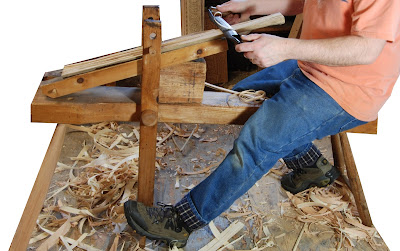
He also gave a talk about "Shaving Horses," and how they are used in wood carving. Demonstrations were given using both antique and more modern tools. Well-known area woodworkers are expected to take part.

 Several shaving horses were available for participants to try out. A shaving horse is a saw horse type of structure, one that a woodcarver can sit upon and using a draw knife, shape a raw piece of wood into a work of art (or utility). Participants will learn how to use a shaving horse and make a cooking paddle and roux paddle using a draw knife and pocket knife.

 
A Shaving Horse being used with a draw knife

Perkins is an official Louisiana Culture Bearer as recognized by the Governor.


Grayhawk Perkins was a featured speaker at the 25th annual Three Rivers Art Festival in Covington.  

See also:

Grayhawk Perkins Tells About the Area and Its Music 

Native American History 

Tuesday, March 1, 2022

Girod Street - Part 2

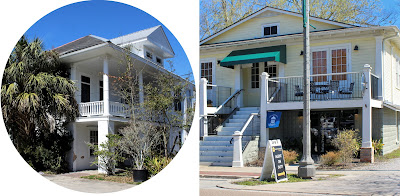
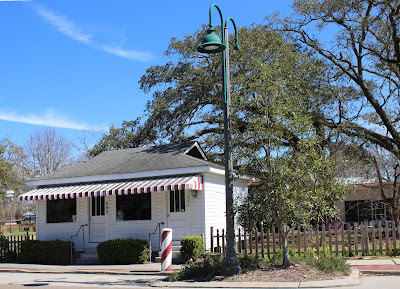
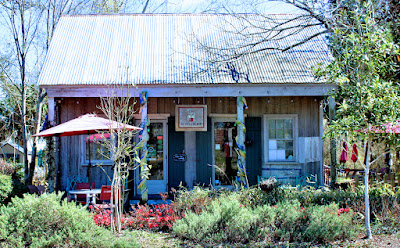
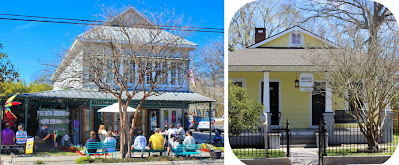
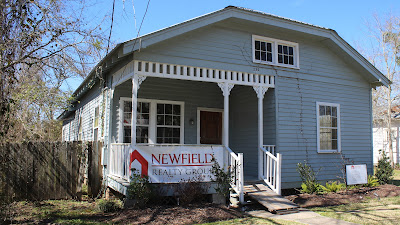
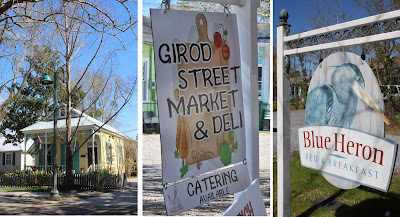
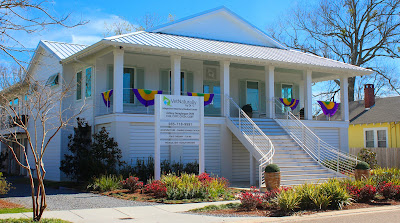
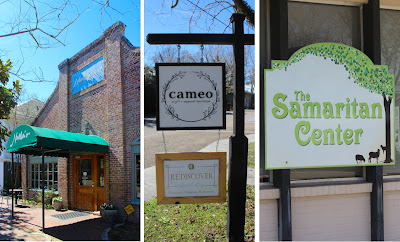
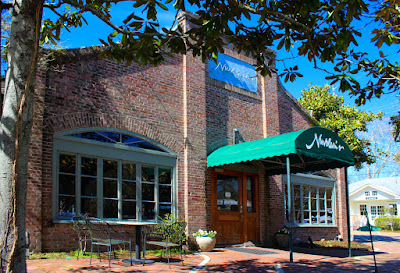
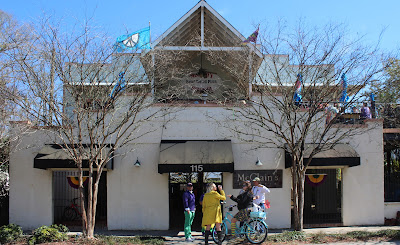
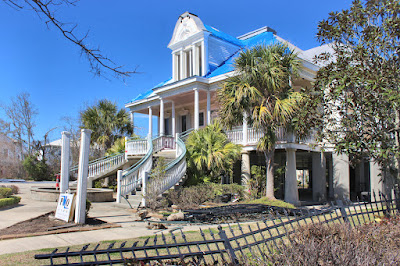
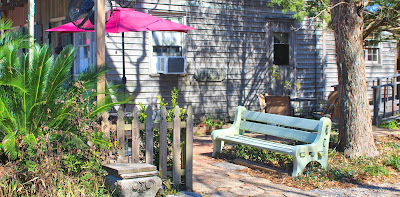
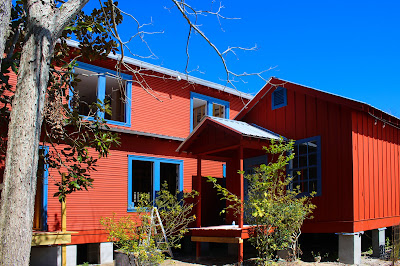
 Girod Street in Mandeville is home to a variety of interesting buildings, both homes and offices. Recently I took a number of pictures of those buildings and businesses between Tammany Trace and the lakefront. This is the second batch of photographs. The first batch may be viewed by CLICKING HERE.

   According to an article in the Times Picayune, Girod Street in Mandeville was named in honor of Nicholas Girod, the fifth mayor of New Orleans (and wealthy merchant), who once hatched a scheme to rescue deposed French emperor Napoleon Bonaparte from exile and bring him to the area.

Here is the second batch of pictures recently taken along Girod Street:

Click on the images to make them larger. 


The Book & The Bean
 
 
The Beach House / Smiley Law Firm 


Vet Naturally
 
 
Nuvolari's  


McClain's


Donz Bar


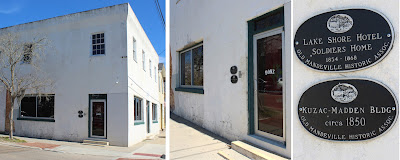
According to the City of Mandeville website:  The building at the corner of Girod Street and Lakeshore Drive (1951 Lakeshore Drive) was built circa 1850. "In the 1860’s, it was part of a large complex of buildings known as the Soldier’s Home. Honore Dousan, émigré from France and a physician in Napoleon’s army, cared for Confederate soldiers there. "


Old Rail Brewing Company 


See also:

Name Change Game

The Streets of Mandeville

And here is a video of the photographs set to music...