Tuesday, June 16, 2020

Home Ec Awards 1976

Click on the following photos and article to read about local and statewide Home Economics awards given by the LSU Cooperative Extension back in 1976.


Monday, June 15, 2020

Tourism Bonanza Mid-1980's

When the World's Fair came to New Orleans in 1984, parishes throughout the state braced for an onslaught of tourists from around the country and from around the world.

Every part of the state ramped up its tourism promotion and visitor/hospitality efforts, especially St. Tammany Parish. At the beginning of the year, St. Tammany ranked 9th in the state for parishes seeing more than a million dollars being spent on travel-related state taxes.

Since many people were going to be passing through Slidell on their way to the World's Fair, a number of pamphlets and promotional items were printed up and distributed out of the tourist welcome centers on Interstate 10 and Interstate 59. Demand for the informational pamphlets was high, so even more were produced and distributed in 1985, 1986 and 1987. St. Tammany was becoming a destination tourist location of its own.

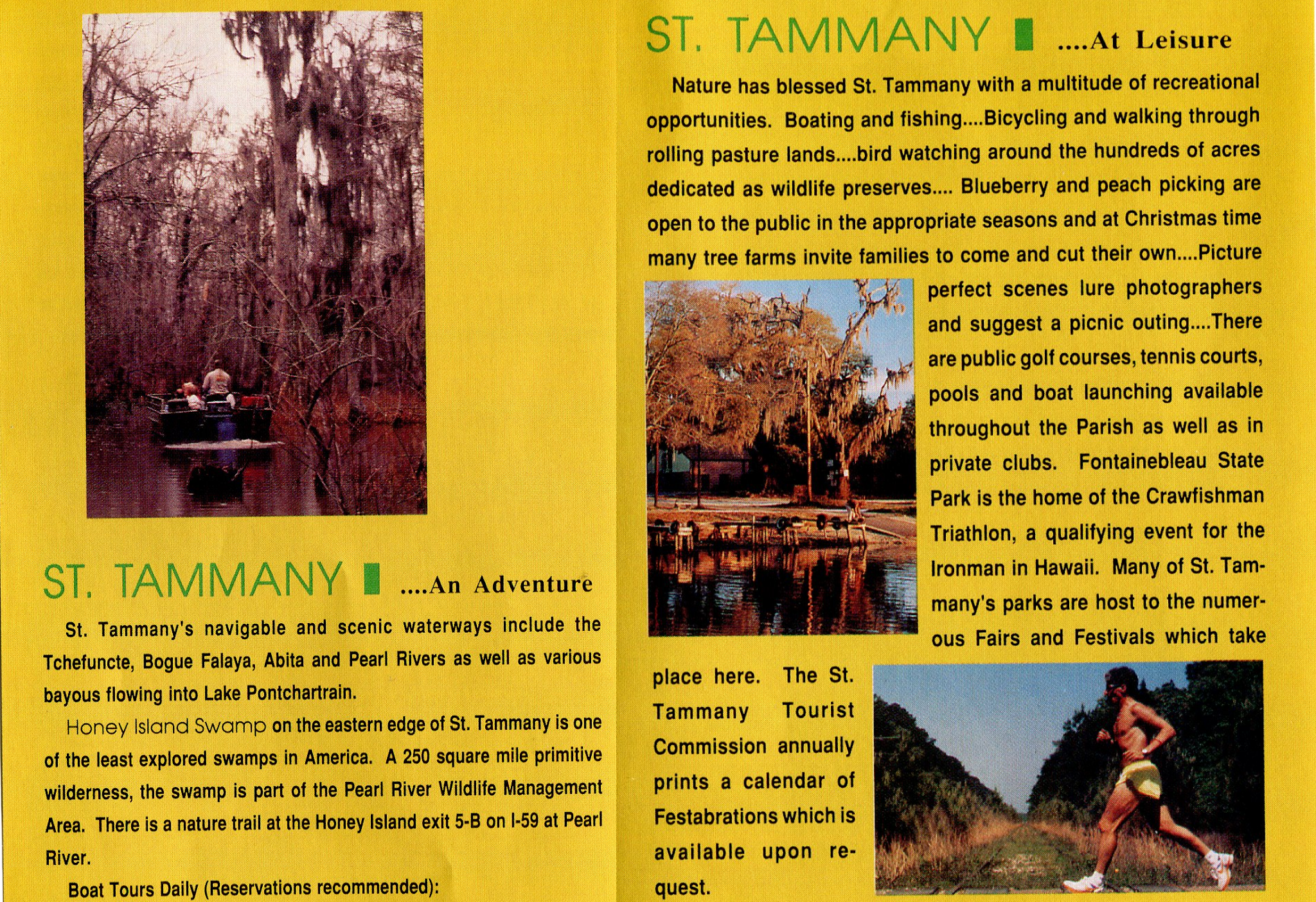
Here are some of the tourism brochures of the time:


Click on the images to make them larger.


Here is some of the text from those 1987 tourist information pamphlets about St. Tammany Parish:

HISTORICAL NOTES


Large shell mounds, Indian artifacts, abundant wild life, and artesian springs, indicate that St. Tammany Parish was a happy hunting ground long before recorded history. The Spanish, French and English took turns using the pine tar, cypress lumber, and brick clay for building their empires. The deep rivers, slow bayous and swamp have supported ship builders, pirates, and lake schooners since the early 18th Century.

Altogether 10 flags have flown over the area with little bloodshed. Known as "British West Florida" the English settled here before the American Revolution. The name 'Tammany' represents a Delaware Indian adopted by Eastern revolutionaries (Tammany Hall) - the `Parish' is an old Spanish ecclesiastical district term. The French legal tradition has been followed since Bienville and his band of explorers first camped here in the early 1700's.

During early years the inlets and bayous were favorite hideouts for pirates and outlaw bands who terrorized ships in the Gulf. The Honey Island Swamp sheltered Pierre Ramaux (the 'King of Honey Island') and his band.

Where the Tchefuncte River enters Lake Pontchartrain one finds the beginning of the Natchez Trace. Flatboats floated goods down the Mississippi to New Orleans - the crews took the overland route home by way of Madisonville.

There were many engagements during the Civil War. Trade was interrupted, gunboats scuttled in the river. Slowly schooner traffic resumed in the 1880's and St. Tammany's clear pine air and healthful artesian springs became attractive to city dwellers as an escape from the dreaded yellow fever.

FORT PIKE—Located to guard the entry into Lake Pontchartrain. Built In 1819 on the site of an earlier French bastion.

HONEY ISLAND SWAMP—Home of legendary outlaws and "Bigfoot" monster stories. A nature trail is maintained for photographers and bird watchers.

NATIONAL SPACE TECHNOLOGY LABORATORIES—Originally a rocket testing center for Lunar Landing program; presently involved in Space Shuttle and Earth Science.


OLD JAIL—On First St., Slidell - dates from 1860's

OUR LADY OF LOURDES SHRINE—in Lacombe. Built by Fr. Francois Balay over a spring to commemorate vision of St. Bernadette. .

ABITA SPRINGS PAVILION—and Park. Built in 1888 on site of Indian medicinal springs. Listed on National Register of Historic Places.

CHRIST EPISCOPAL CHURCH—Estab­lished 1846 in Covington. Dedicated by Bishop Leonidas Polk who was later killed fighting for the Confederacy in 1864. Contains 8 of the 10 flags which have flown over the Parish.

ST. JOSEPH'S ABBEY—off Hwy. 25 - a Benedictine monastery. The Chapel and Refectory contain frescoes by Fr. Dom Gregory deWit.

LAKE PONTCHARTRAIN CAUSEWAY-24 miles long making it the longest bridge in the world. A major route to New Orleans and beyond.

Slidell Area

The Slidell area was of particular interest because of the three interstates that crossed paths there.


Swamp Sights Make a Novel Side Trip

A visit to Honey Island Swamp makes an interesting side trip for visitors to the city who are looking for something unusual to do.

The swamp is about 40 miles northeast of New Orleans via Interstate 10 East. The tours depart from Indian Village Landing on the West Pearl River, five miles east of Slidell.

Honey Island Swamp is a semiwilderness with towering cypress trees and abundant wildlife, including alligators, deer, wild hogs, black bear, bald eagles, nutria, beaver, owls, wood duck and other migratory birds.

Tours are given by Paul Wagner, owner of Honey Island Swamp Tours. Wagner also is a wetlands ecologist with 12 years' experience as an environmental consultant in South Louisiana swamps.

Wagner, along with Robbie Charbonnet, a lifetime resident of the area who has explored the swamp since childhood, provide the tours aboard comfortable Coast Guard flatboats.

These boats are 20 or 24 feet long with a combined capacity of 36 persons. The boats allow tour members access into the harder‑to-reach small bayous and  sloughs in the interiors of the swamp.

Members are encouraged to bring along their cameras and binoculars. The tour operator also provides van transportation from New Orleans hotels to and from the Indian Village Landing on the West Pearl River, the tour departure point.

Reservations are required for the tours. While in the area, tour members can also enjoy dinner at a quaint seafood restaurant called Indian Village Catfish. Its specialties include fried catfish, gumbo, crabs, alligator and shrimp.


Sunday, June 14, 2020

Flag Day

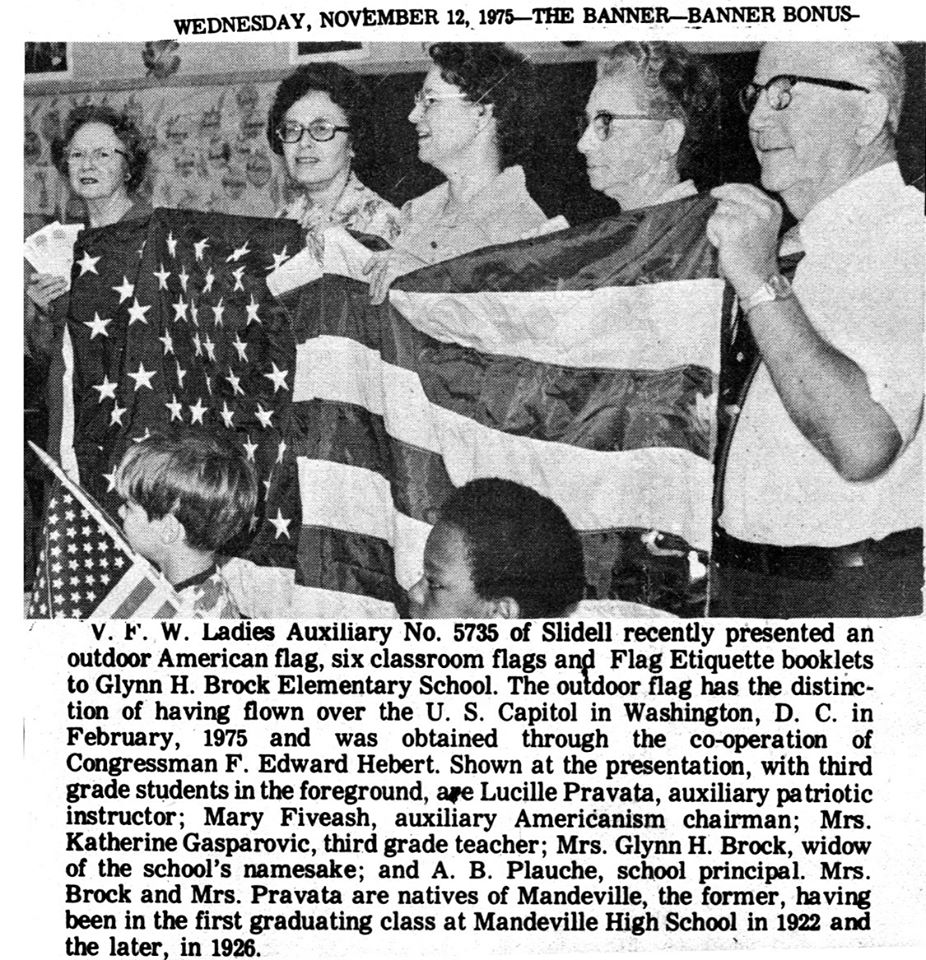
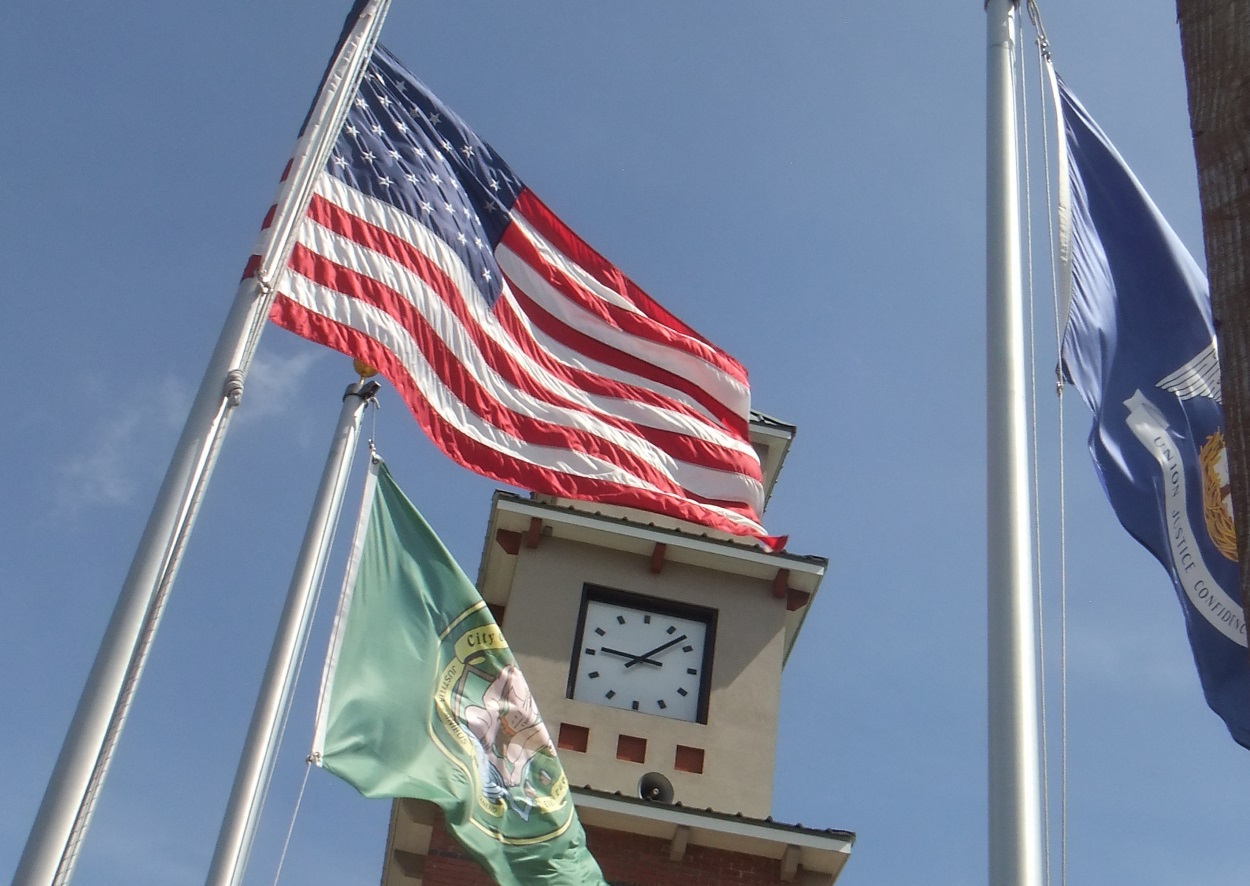
Happy June 14th,  Flag Day!


Click on the images to make them larger.


Saturday, June 13, 2020

Old Anchors Found in Lake Pontchartrain

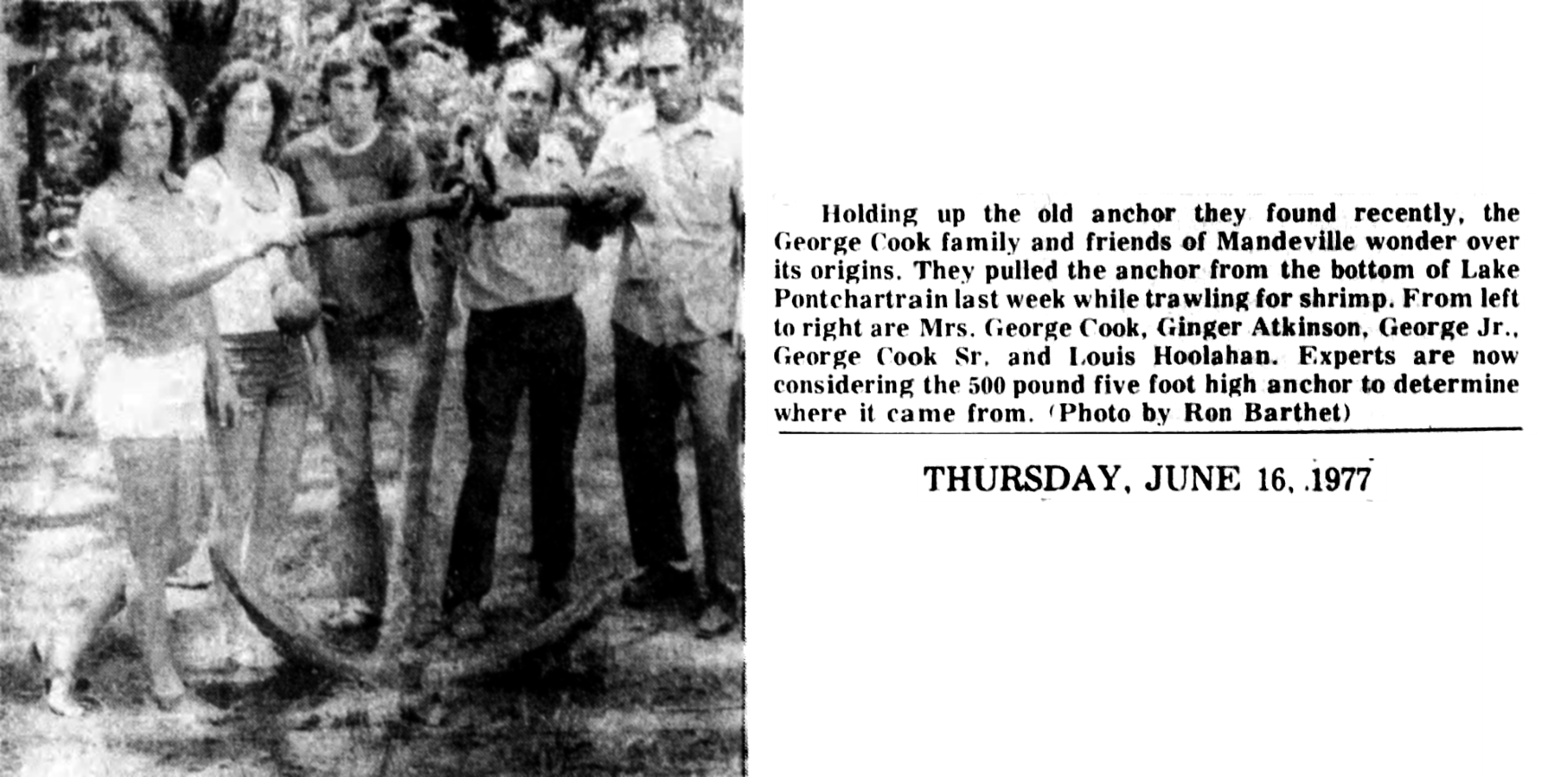
At the bottom of Lake Pontchartrain lies more than 300 years of nautical mishaps, buried in who knows how much mud and silt. Here is an old anchor that was found in the lake in the mid-1980's.


Earlier, in 1977, another large anchor had been found at the bottom of the lake. 


Click on the images to make them larger. 


Thursday, June 11, 2020

Schooner William Martin at Columbia Landing

 Here's a picture from the past showing the schooner William Martin docked at Columbia Landing in Covington. Click on the image below to make it larger. 


Wednesday, June 10, 2020

Slidell Museum 1987

  The story of the Slidell museum...

 A Museum Behind Bars: an article from 1987

The yellowed pages of an old school playbill, a sewing basket, and the jacket of a World War I uniform are displayed in one cabinet. In another are old newspapers and family photograph albums. An antique pump organ and gramophone stand in a corner. These items are now a museum collection housed in Slidell, Louisiana's, old city jail and town hall that was built in 1907.

"We're a local-history museum. We tell about the place and the people," says Director Dale Tidrick.

The objects in the museum are far less valuable than those found in many larger and more well-endowed Louisiana repositories. But for the people who live in Slidell or whose families once called the town home, the eclectic collection is priceless.

Genealogists may discover valuable pieces of history from the papers of several founding fathers. The tax receipts from a former boardinghouse reveal that the owners received an astounding $8.15 bill for property taxes in 1909. A photograph  taken in the early 1940's shows Lions Club members installing street signs.

Slidell grew up as a railroad stop on the line between Jackson, Mississippi, and New Orleans. The town was not chartered until 1888, even though a post office was established four years earlier. The museum displays the 1884 certificate presented to Jacob F. Hufft commissioning him as a postmaster at Slidell Station.

Tidrick says there was plenty of excitement in the museum building during the four decades that it was used as a jail. He repeats a favorite local tale about the man who got intoxicated every Friday. "They would haul him in, and he would get out on Saturday morning. Then he would show up before the judge on Monday to be fined.

"Finally the judge decided to try and teach him a lesson, so the man was kept in jail all weekend," continues Tidrick. "But when he went before the judge on Monday morning, he was still drunk. A buddy finally owned up to going up the street to a drugstore and buying a bottle of whiskey. He also got a straw from the soda fountain and let his jailed pal drink through the bars of the window."


Tuesday, June 9, 2020

Cross the Lake to Slidell 1987


Cross the Lake to Slidell: A newspaper article from 1987
 
To many travelers driving I-10 through Louisiana, Slidell is just another exit near New Orleans. But after lying in the shadow of the Crescent City for years, Slidell is no longer content to remain a sleepy town at the end of the exit ramp.

Actually, it's the slower pace and quieter life-style that attract New Orleanians and others to the North Shore of Lake Pontchartrain. The renovation of a section of the original town site is also prompting business owners to set up shop in Slidell.

When Loys Vollertsen moved into a shotgun house at 1944 First Street about 10 years ago, she was alone. Before long, other antique dealers and artists set up shop as her neighbors.

Vollertsen's The Antique Store is filled with Victorian and American primitive an­tiques. She also carries an extensive selec­tion of locally made handicrafts, includ­ing beautiful quilts, embroidered pillows, and coverlets.

Next door, at the Country Cupboard, you will find eight different shops neatly tucked away. under one roof. Watercolors by Stella Coward entice visitors to step inside. Don't leave without venturing up­stairs to view the intricately detailed minia­ture dolls by Pat George or the interesting  paper-and-fiber collage works of Artist Susie G. Webb. In another corner, Vad Moskowitz busies herself at a loom, weav­ing fabric colored with natural dyes.

Basketweaving and other crafts are taught on a regular basis at Peach Tree Cottage. And at Barbara's Victorian Closet, Barbara Starling gives tips on mak­ing delicate lace baskets and decorating linens and clothing with lace.

The building at 1960 First Street was originally built as a mercantile store about 75 years ago. Much like its predecessor, Olde Towne Antiques has almost anything shoppers are looking for, all in one stop. The rooms are filled with furniture, deco­rative pieces, linens, and a large selection of antique jewelry, including Victorian and .Arts Deco accessories.

Le Mistral, a delightful French restau­rant at 2228 Carey Street, is a perfect place to take a break from antique hunting. Omar Chabane and Jacques Brémond blend the culinary teachings of their native France with Creole'specialties they picked up from four years of working in various French Quarter restaurants.

Deeanne Lowe and her husband, Butsie, recently expanded their La Petite Antiques from Olde Towne into a much larger operation as The Antebellum House, located at the corner of U.S. 190 West and Cherry Street. The roomy interior is deco­rated differently in each section, from country casual to whimsical, where eight shopkeepers offer furnishings, homemade food products, and other collectibles.

The romantic at heart are drawn directly into a room papered in pink and scented with sweet potpourri. Every conceivable item made of lace, satin, or wicker, or shaped into hearts creates a dreamy ambience at the Victorian Attic. Owner Sue Ann Claverie's main drawing card is hand­made porcelain dolls, outfitted in beau­tiful Victorian clothing.

All the dolls are named, and each is certified by the doll-maker. It seems that only a person with a lifelong passion for dolls could produce such lovely creations. But Claverie says, "No. I was a tomboy—blue jeans, tractors, and all. I never played with dolls as a little girl."


Monday, June 8, 2020

Covington City Charter 1886

 In 1886 a copy of the Covington City Charter was printed by the St. Tammany Farmer printing service. Here are some photographs of that document.


Click here to view a PDF File of the charter pamphlet.


Sunday, June 7, 2020

Bonfouca Hunting Club Sells Property

 In 1883, some one hundred and thirty years ago, a group of 141 Slidell area men got together and chipped in money to buy some marshland for the purposes of starting a hunting club, the Bonfouca Hunting Club. The 1400 acres was located southeast of Slidell.

Then in 1951, the club, long since inactive, decided to sell off the land. After considerable debate and litigation, it was set at a value of $70,000, with the sum to be divided among the descendants and heirs of the original members.

Here is a newspaper version, published in 1953, of the history of the Bonfouca Hunting Club, its legal challenges and the names of the original members, along with the money they contributed to buying the original property.

Click on the image to make it larger and more readable. 


Saturday, June 6, 2020

Covington Mardi Gras 1966 Video

Here's some old home movie video of the Mardi Gras parade in Covington in 1966, some 54 years ago. This video was found on the Facebook page of the late Mary Busby Frindik as part of her Andrew Erwin Collection.